three sculptural protagonists. Three nations. One elevation. Lake Constance, A | CH | D, July 2026
Photography: Michael Häfner
Photography: Thomas De Meyer
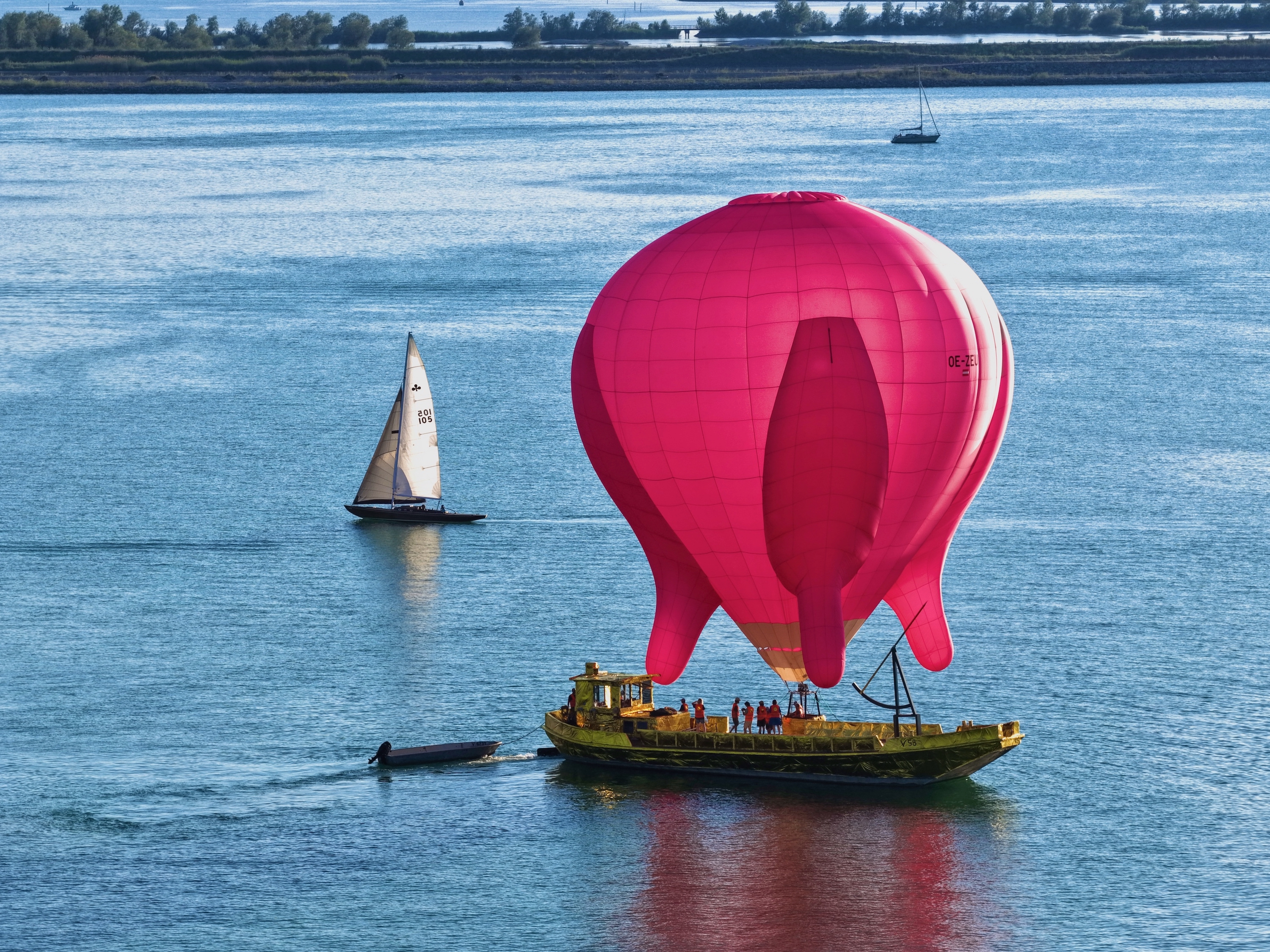
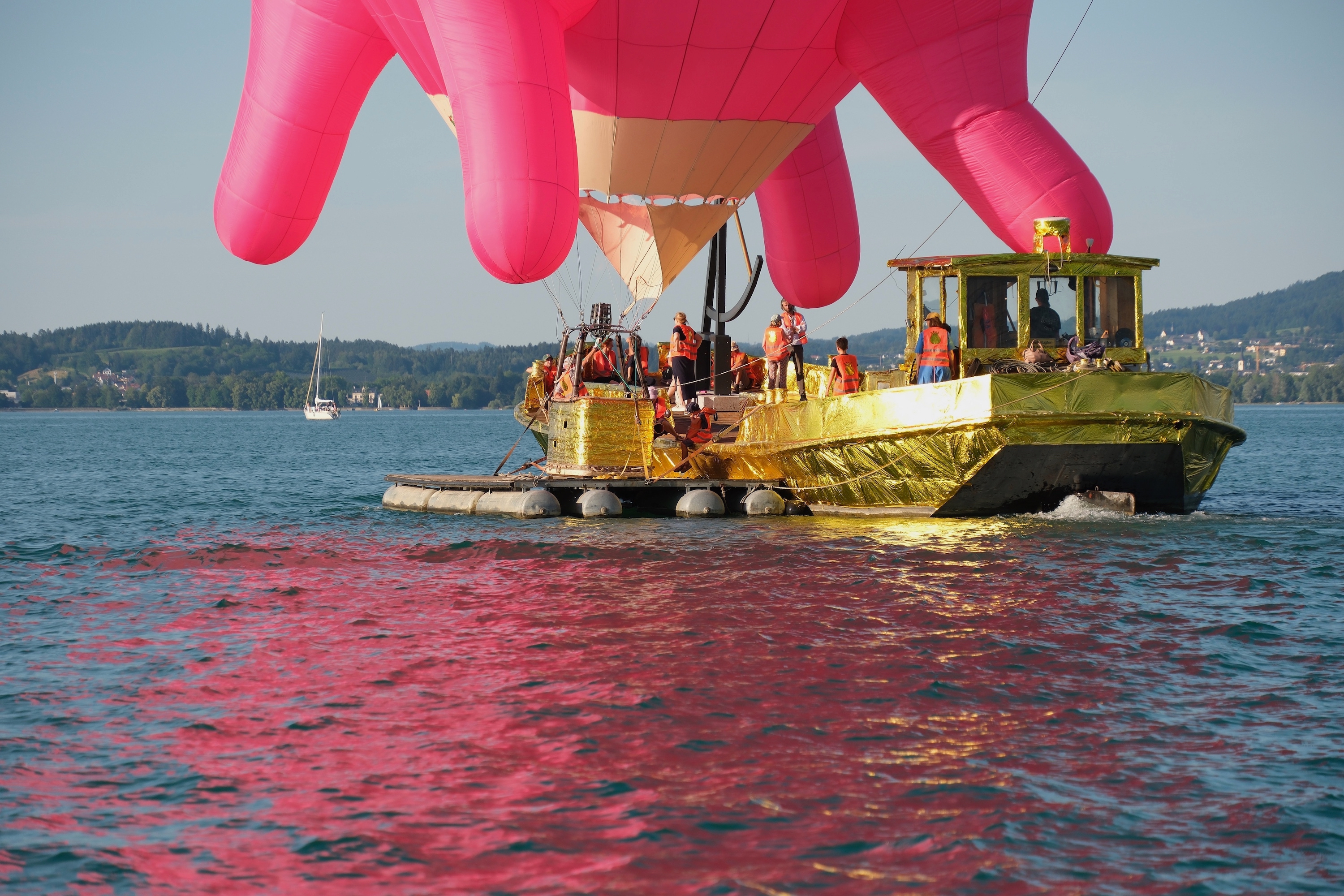
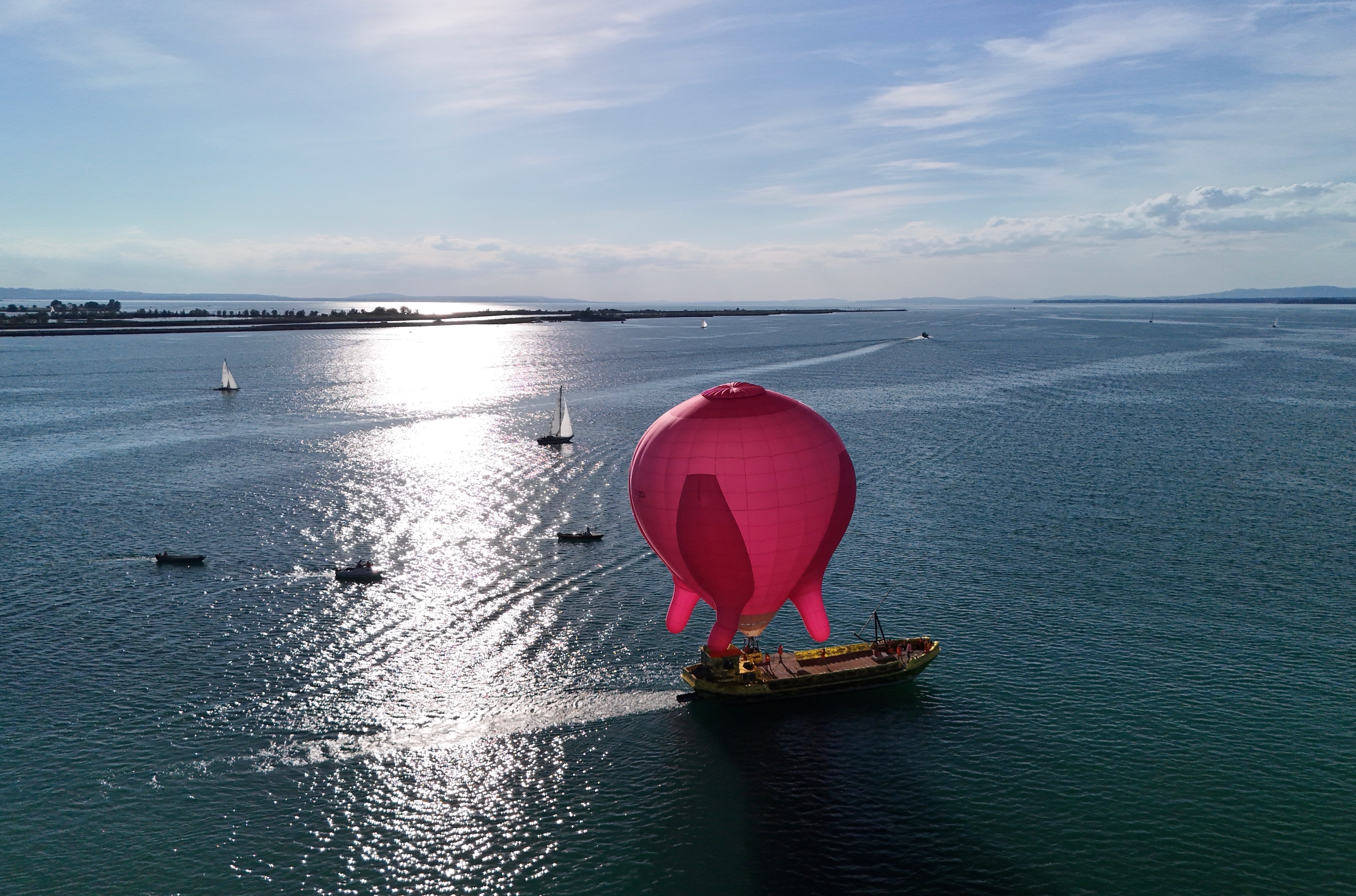
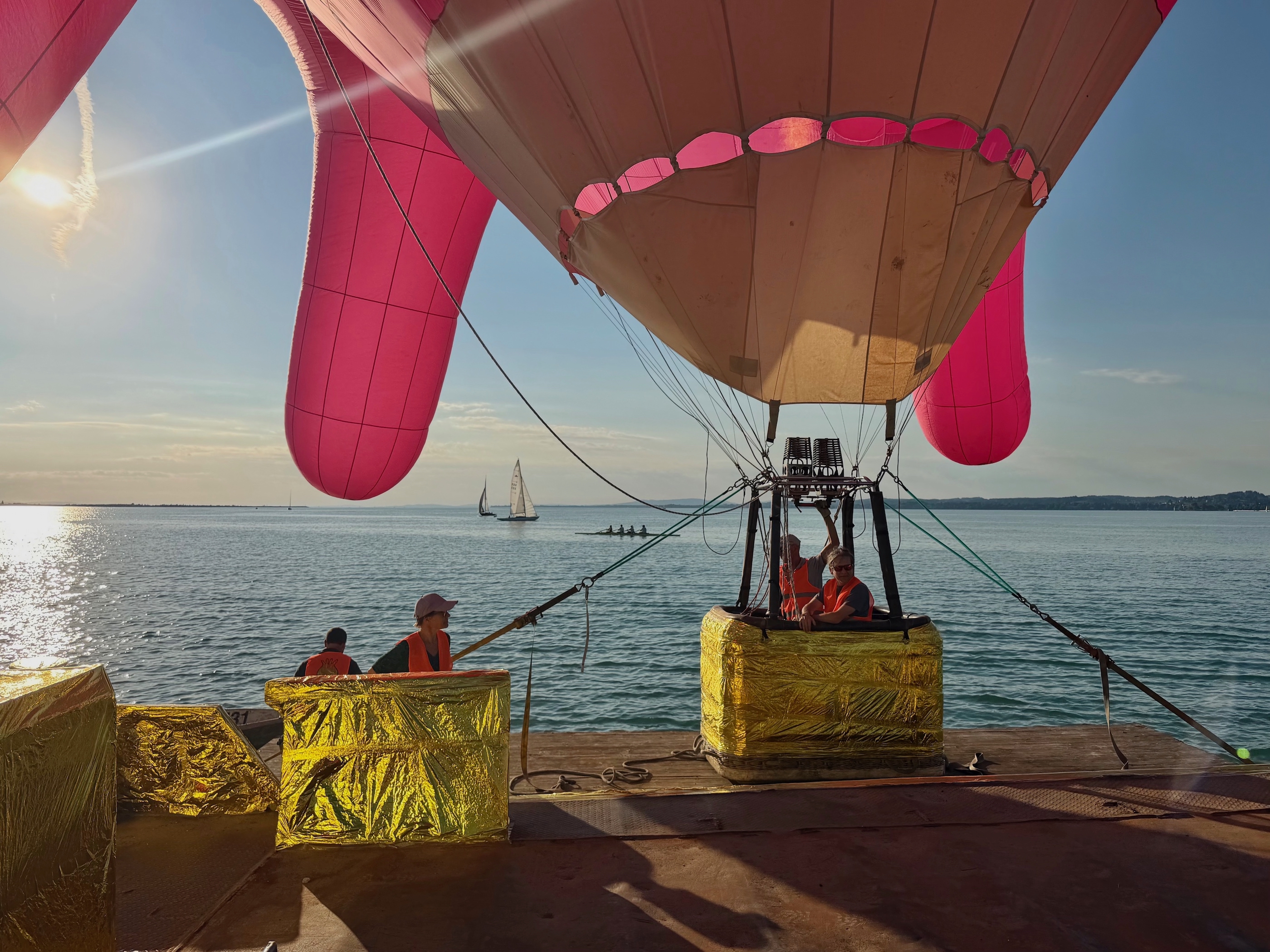
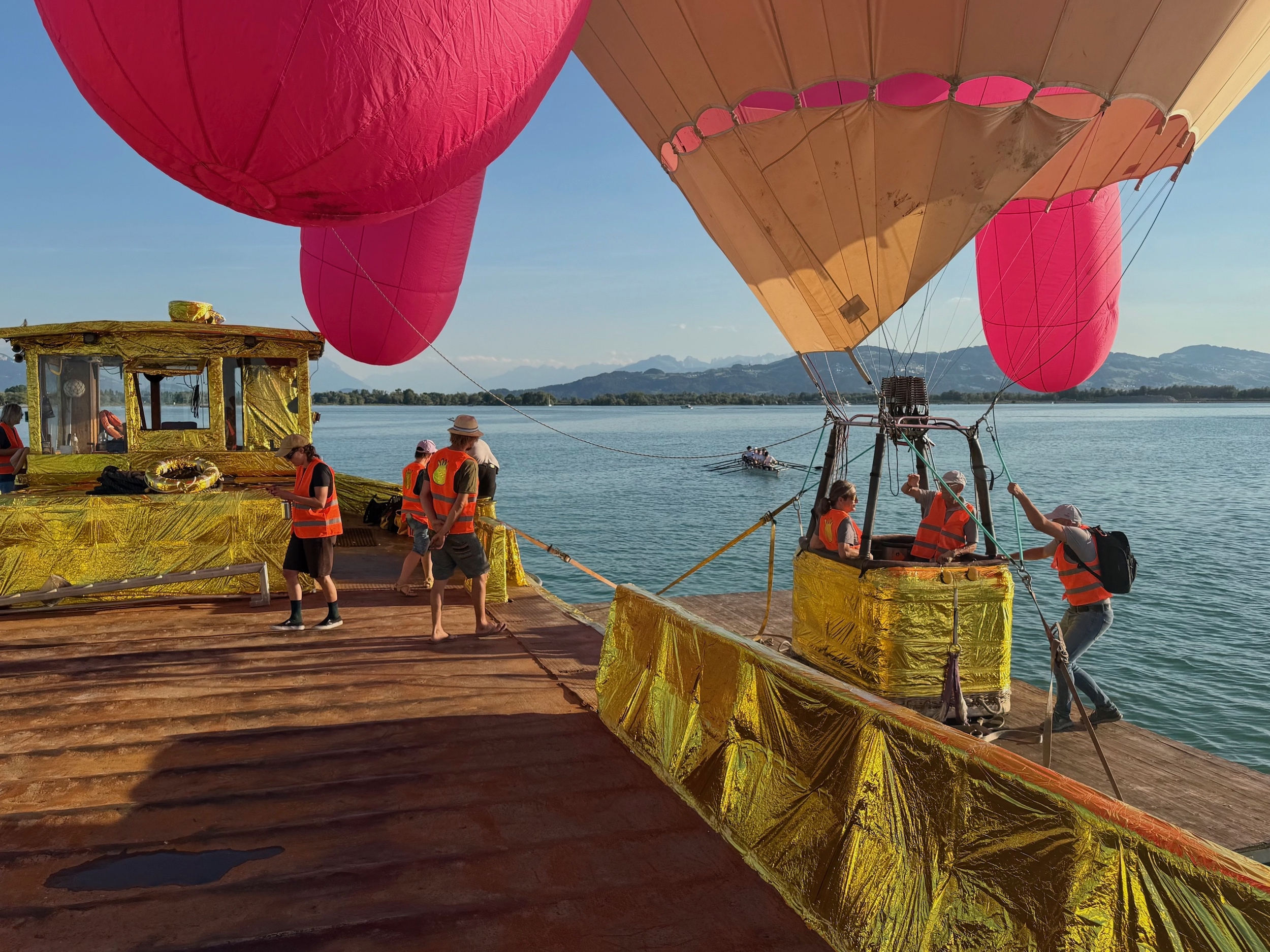
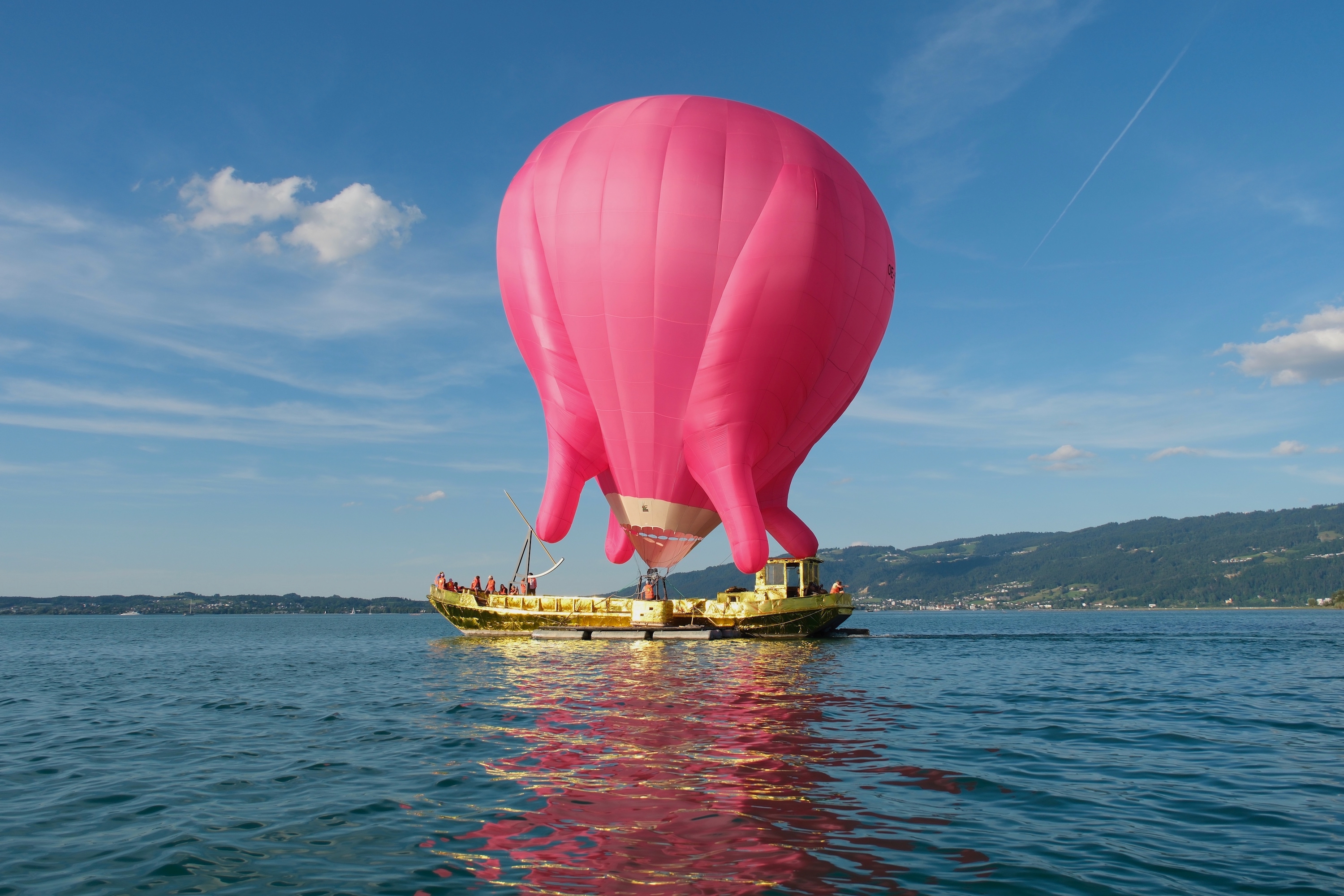
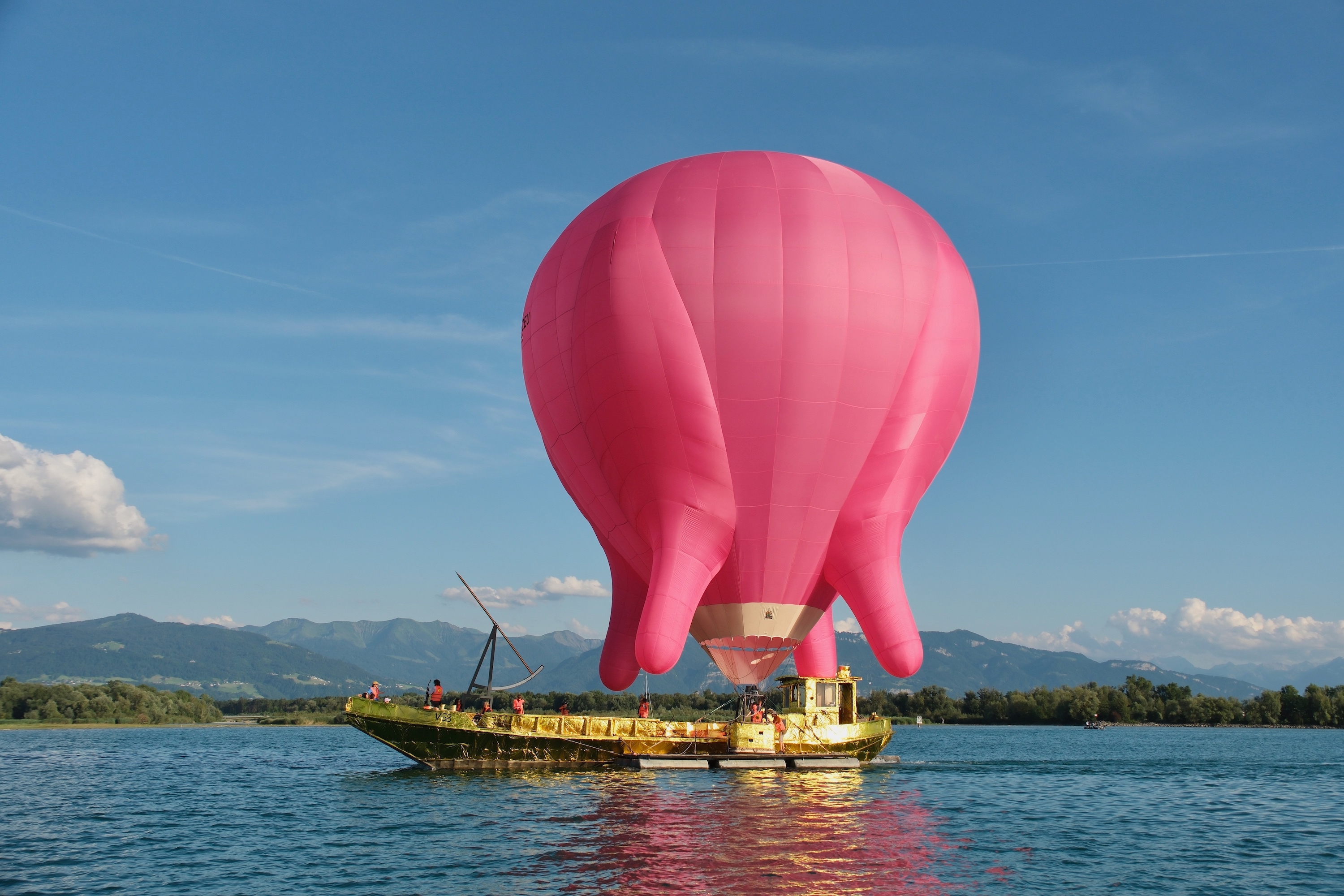
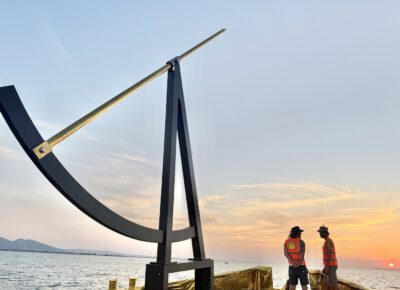
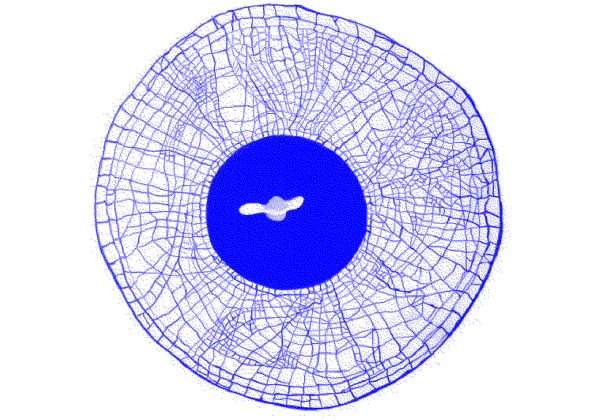
On the golden contact surface, the Sextant aligns with the North Star, serving as an analogue instrument of orientation and simultaneously pointing to the Earth's rotational axis.
Drone Cinematography: Michael Häfner
Photography: Michael Häfner
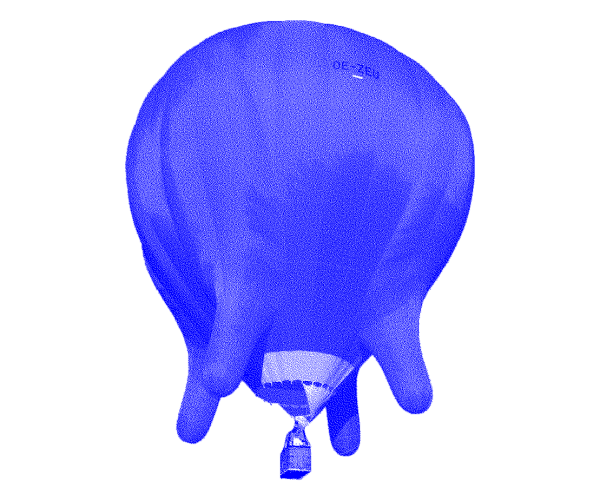
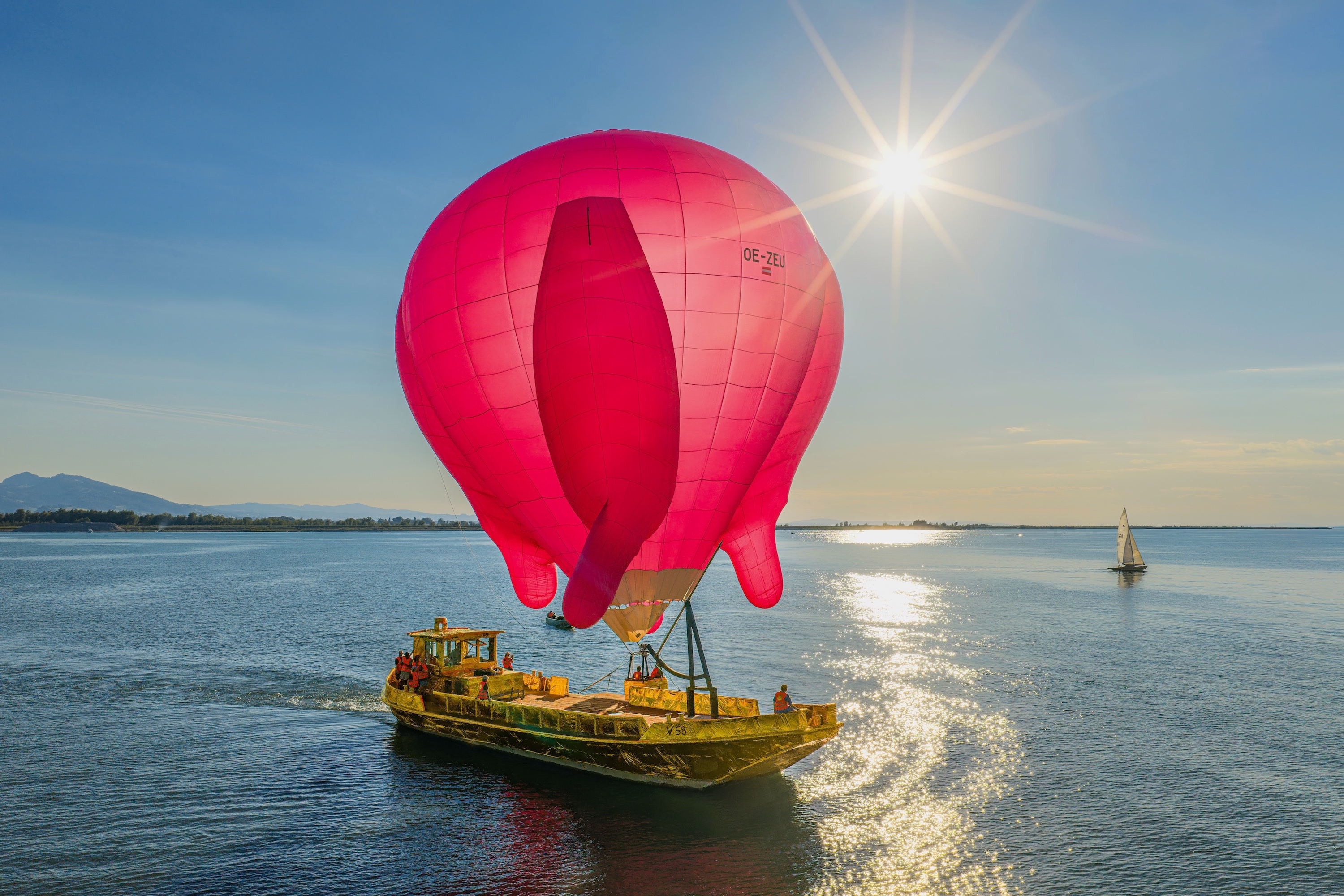
Above the sextant, FLYING UDDER rises, connecting orientation with care.
Rather than being choreographed, CARGO & INTERFACE is shaped through atmospheric conditions and embodied presence.
Three sculptural protagonists. Three nations. One elevation.
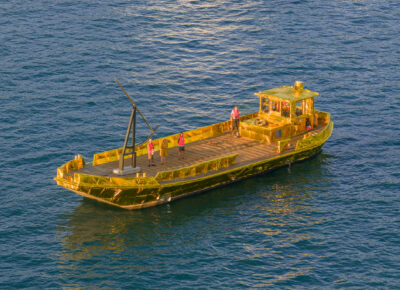
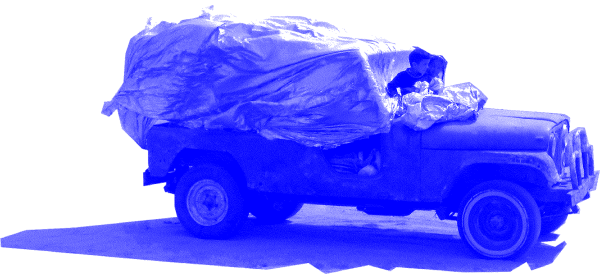
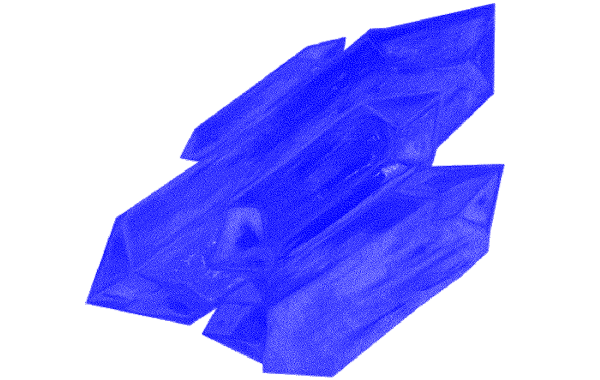
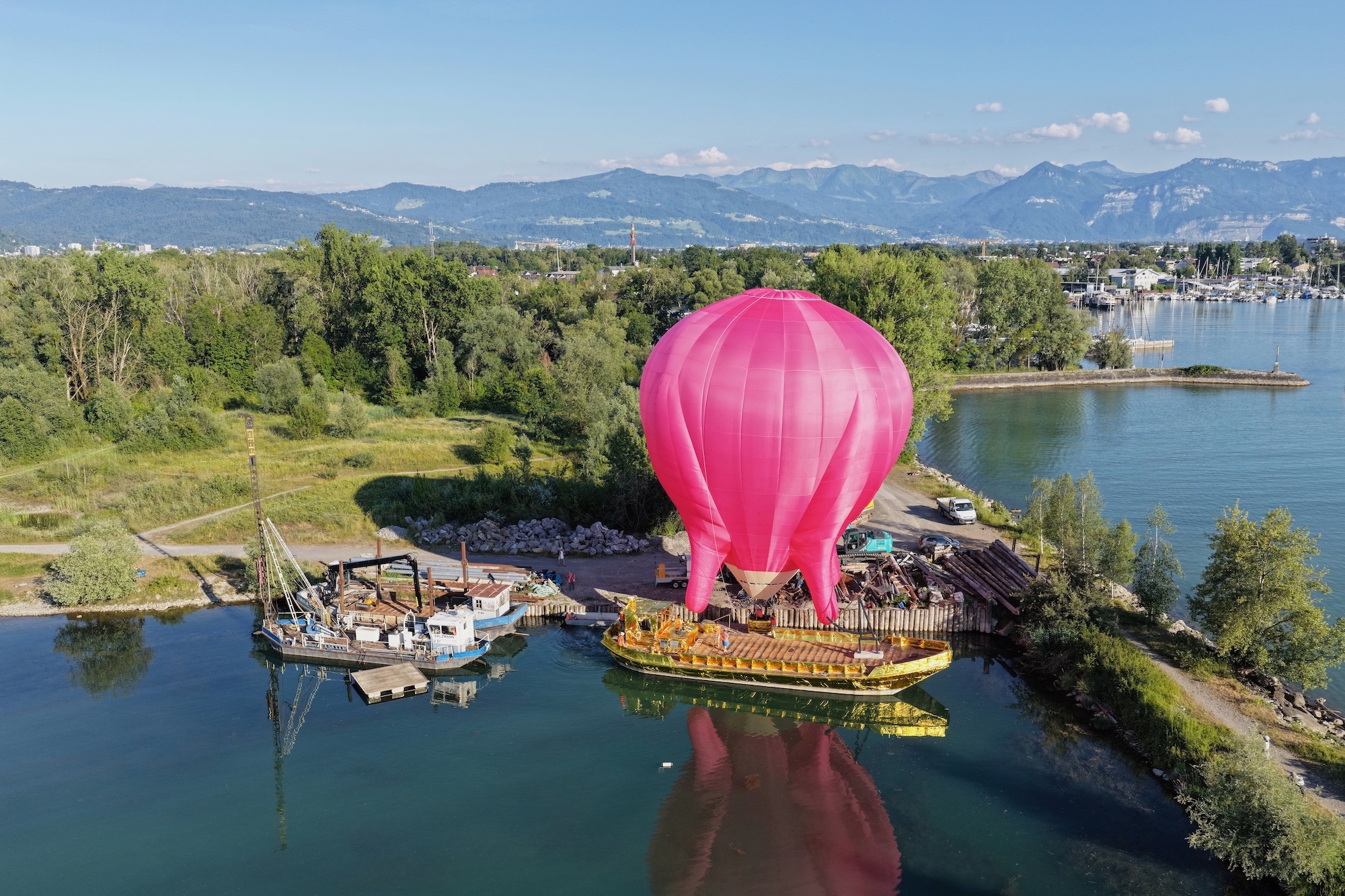
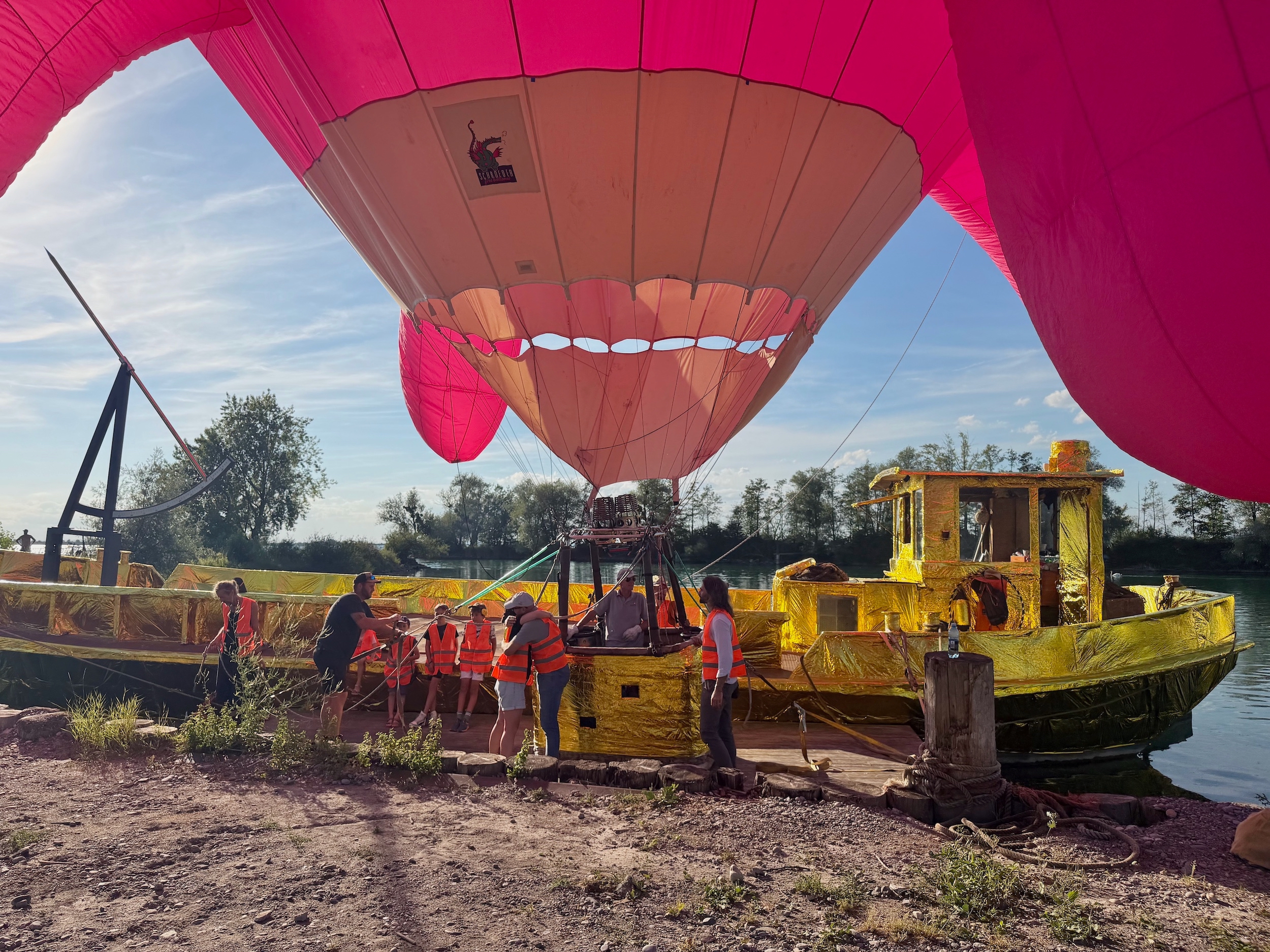
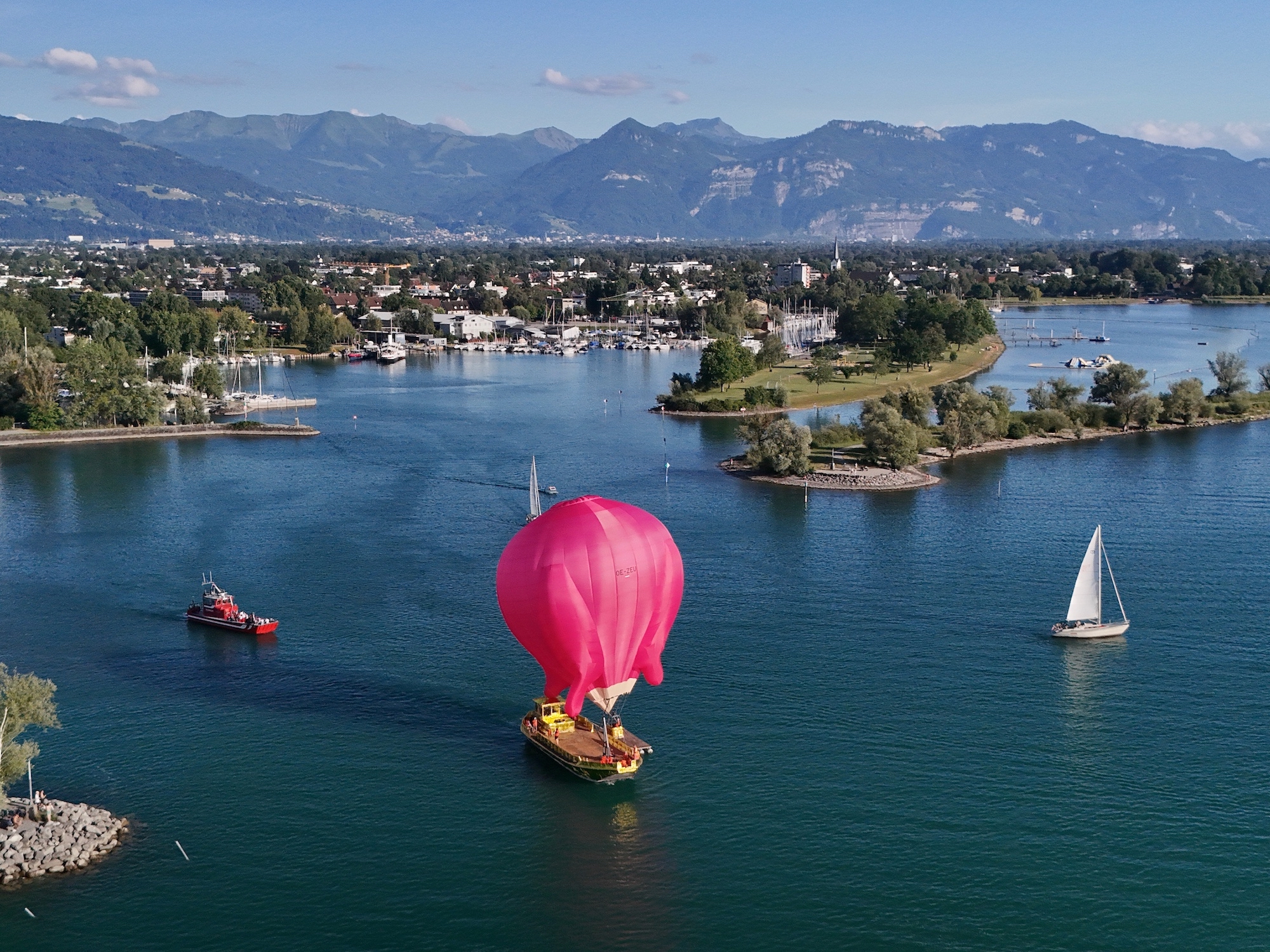
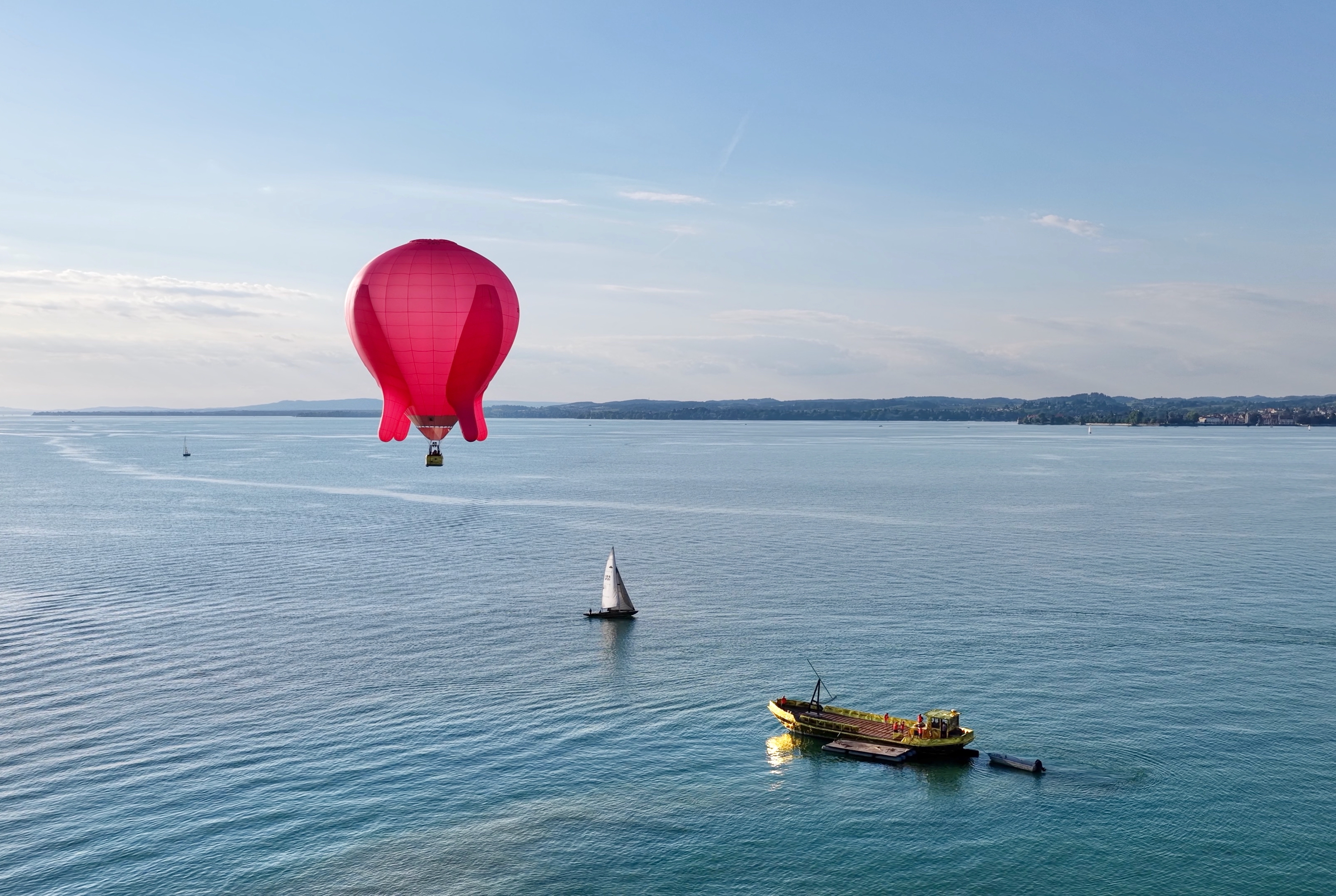
Set on Lake Constance, whose international waters have never been definitively divided, the work unfolds within shared waters that transcend national borders. The Flying Udder, the Sextant and the Golden Gravel Ship form a temporary constellation of three sculptural protagonists, activated by elemental forces. The elevation of the FLYING UDDER above the Golden Gravel Ship marks the defining moment of the work. A Sextant, permanently aligned with the Earth's axis through the North Star, serves as an analogue form of orientation. Rather than being choreographed, CARGO & INTERFACE takes shape through atmospheric conditions and embodied presence.
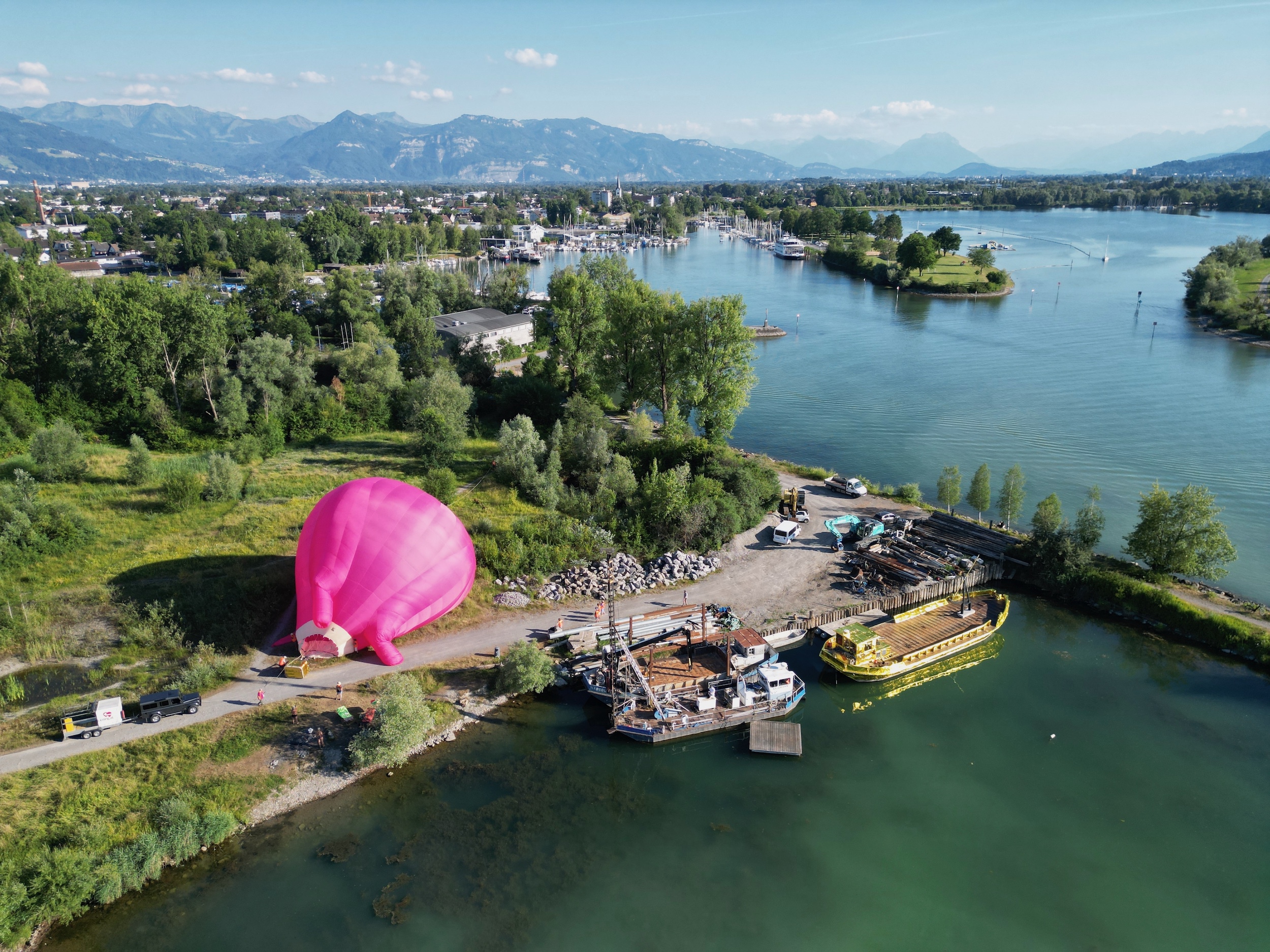
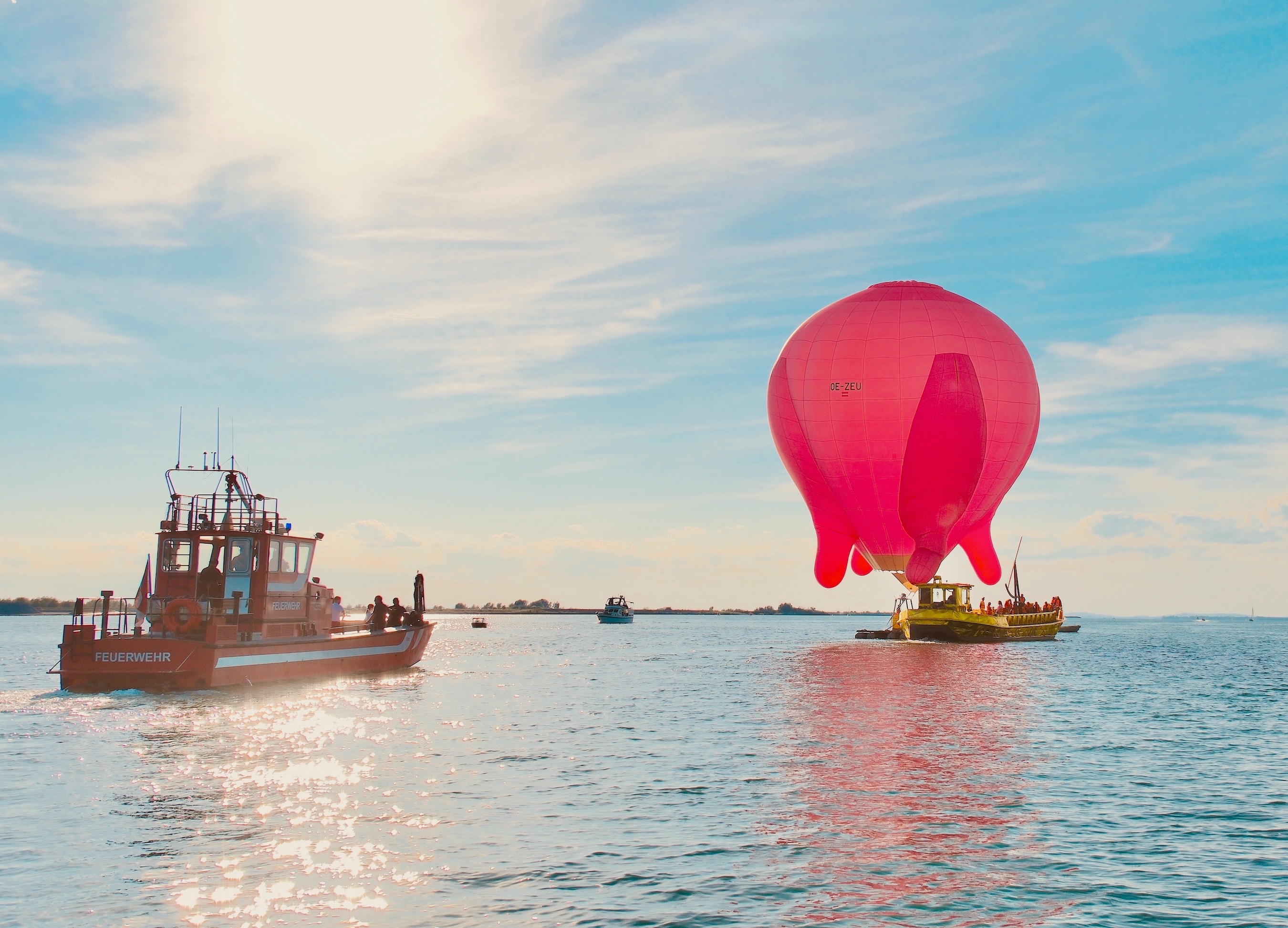
Over the course of several weeks, the work unfolded through preparation, waiting, changing weather conditions and repeated activations. As intended, it remained open to the forces of nature. Strong winds prevented the planned elevation during the trinational gathering of passenger ships. Instead, the balloon launched from the shoreline, crossed Lake Constance, touched the water and rose into the sky. When the elemental conditions finally aligned, the work found its form. Without prior arrangement, MS Oesterreich, DS Hohentwiel and the local fireboat became part of the work. Preparations, flights and landings were integral to its unfolding. The final form could not be designed; it had to be discovered.
Drei skulpturale Protagonisten. Drei Nationen. Eine Erhebung.
Am Bodensee, dessen internationale Gewässer bis heute keine völkerrechtlich eindeutig festgelegte Grenze kennen, entfaltet sich die Arbeit in einem gemeinsamen Raum jenseits nationaler Grenzen.
Das EUTER, der Sextant und das Goldene Kiesschiff bilden eine durch elementare Kräfte aktivierte Konstellation dreier skulpturaler Protagonisten. Die Erhebung des EUTERS über dem Goldenen Kiesschiff markiert den zentralen Moment der Arbeit. Ein Sextant, dauerhaft über den Nordstern an der Erdachse ausgerichtet, eröffnet eine analoge Form der Orientierung. CARGO & INTERFACE wurde nicht choreografiert, sondern entwickelte sich im Zusammenspiel atmosphärischer Bedingungen und kollektiver Präsenz.
Über mehrere Wochen entfaltete sich die Arbeit durch Vorbereitung, Warten, wechselnde Wetterbedingungen und wiederholte Aktivierungen. Wie vorgesehen blieb sie offen für die Kräfte der Natur. Starke Winde verhinderten die geplante Erhebung während des trinationalen Zusammentreffens der Passagierschiffe. Stattdessen startete der Ballon vom Ufer, überquerte den Bodensee, berührte die Wasseroberfläche und stieg anschließend in den Himmel auf.
Als sich die elementaren Bedingungen schließlich fügten, fand das Werk zu seiner Form. Ohne vorherige Planung wurden die MS Oesterreich, das DS Hohentwiel und das örtliche Feuerwehrboot Teil der Arbeit. Vorbereitungen, Flüge und Landungen waren integraler Bestandteil des Werks. Die endgültige Form von CARGO & INTERFACE entstand erst in der Realisierung. Sie musste entdeckt werden.
The final form could not be designed; it had to be discovered.
about our landing in Bregenz | A
Cargo & Interface Video Collection
As intended, the work remained open, allowing elemental forces to bring it to completion.